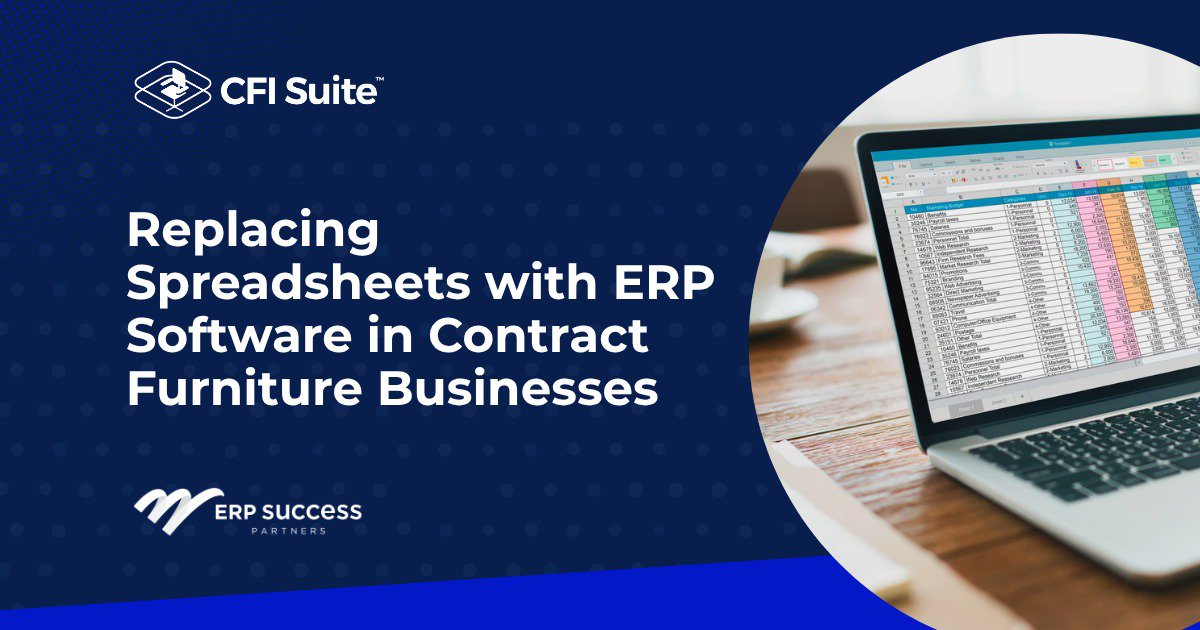
Many contract furniture businesses still rely on spreadsheets to manage daily operations, even when business systems may be a better long-term fit. Teams often use spreadsheets for quoting, order tracking, purchasing, project coordination, and reporting. While familiar, they often become harder to manage as the business grows.
That is where ERP software, also known as business systems within contract furniture, becomes more valuable. As teams need better visibility, stronger coordination, and more reliable information across departments, spreadsheets can start to limit both efficiency and decision-making. For contract furniture businesses, moving to ERP software can create a stronger foundation for more connected operations.
Why Spreadsheets Become Harder to Manage as Contract Furniture Businesses Grow
Spreadsheets often work well early on. They feel familiar, flexible, and easy to update for quoting, tracking, or reporting. But as a contract furniture business grows, they become harder to manage across teams, projects, and daily decisions.
That shift usually starts when more people need the same information at the same time. Sales, operations, purchasing, project management, and finance may each rely on different files, tabs, or versions. As a result, teams can spend more time checking numbers and reconciling updates than moving work forward.
Growth also increases handoffs across the business. More quotes, orders, product details, schedules, and project changes can make spreadsheet-based workflows harder to control. At that point, ERP software gives teams a more connected way to manage information across the business.

Where Spreadsheet-Based Processes Often Break Down First
In many contract furniture businesses, spreadsheet-based processes do not break down all at once. They usually start to slip in areas that depend on frequent updates, shared visibility, and cross-team coordination.
Quoting is often one of the first pressure points. Teams may rely on manual updates to pricing, product details, or scope, which makes it harder to keep information current. Order tracking can also become harder when multiple people update separate files or rely on email to fill gaps.
Project coordination often feels that strain next. When schedules, purchasing details, and project changes live in different spreadsheets, teams can lose time tracking the latest version or confirming what changed. These issues do more than create inconvenience. They can slow execution and increase the risk of avoidable mistakes.
That is where ERP software becomes more valuable. Instead of asking teams to manage growing complexity through separate files, it gives them a more connected way to manage information across the business.
How ERP Software Improves Visibility Across Teams and Projects
As contract furniture businesses grow, spreadsheets make it harder to maintain visibility. Teams may track quotes, orders, purchasing activity, project schedules, and financial data in separate files, which makes it harder to see what is happening across the business.
ERP software improves that visibility by giving teams access to shared information in one system. Instead of checking multiple spreadsheets or asking departments for updates, teams can work from a more consistent view of the project. That helps sales, operations, purchasing, project management, and finance stay aligned.
Stronger visibility also supports faster decisions. When teams can see project status, updates, and open issues more clearly, they can respond with less delay and confusion. For contract furniture businesses, that coordination becomes more important as project volume and workflow complexity grow.

Why ERP Software Supports Better Accuracy and Fewer Manual Workarounds
Spreadsheet-based processes rely on manual entry, repeated updates, and extra checking across files. Over time, that creates more room for errors, duplicate work, and inconsistent information. Even small mistakes can create larger problems when they affect quoting, ordering, project coordination, or reporting.
ERP software reduces that risk by giving teams a more structured way to manage business data. Instead of maintaining separate spreadsheets for each stage of the workflow, teams can update information in one connected system. That reduces manual workarounds and helps keep information consistent across departments.
Better accuracy also builds confidence. When teams trust the information they use, they spend less time verifying details and more time making decisions. For contract furniture businesses, that can mean smoother execution, fewer preventable mistakes, and a stronger operational foundation as the business grows.
How ERP Software Helps Connect Operations, Purchasing, and Financial Reporting
Spreadsheets often split up the parts of the business that need to stay connected. Operations may track one set of details, purchasing another, and finance may rely on separate reports or manually compiled data. That makes it harder to keep teams aligned as work moves forward.
ERP software connects those functions more consistently. When operations, purchasing, and financial reporting work in the same system, teams can follow changes more easily and see how activity in one area affects another. That supports better coordination and reduces the need to piece information together later.
It also gives leadership better visibility. Instead of waiting for updates from multiple spreadsheets, decision-makers can get a clearer view of project activity, purchasing status, and financial performance. For contract furniture businesses, that stronger alignment supports better planning, better reporting, and fewer surprises.
What Contract Furniture Businesses Gain by Moving Beyond Spreadsheets
Moving beyond spreadsheets is not only about replacing a familiar tool. It is about giving the business a stronger way to manage growth, complexity, and cross-functional work. As contract furniture businesses take on more projects and moving parts, they need systems that support coordination without adding confusion.
ERP software helps create that foundation. It gives teams a more connected way to manage information, improve visibility, reduce manual work, and support more accurate reporting. Those gains can make daily operations more efficient while giving leadership better insight into business performance.
For contract furniture businesses, the long-term value is not just better organization. It is stronger alignment across teams, smoother project execution, and a business system that can support growth more effectively than spreadsheets alone. To see how ERP Success Partners supports that transition, explore CFI Suite or contact the team.