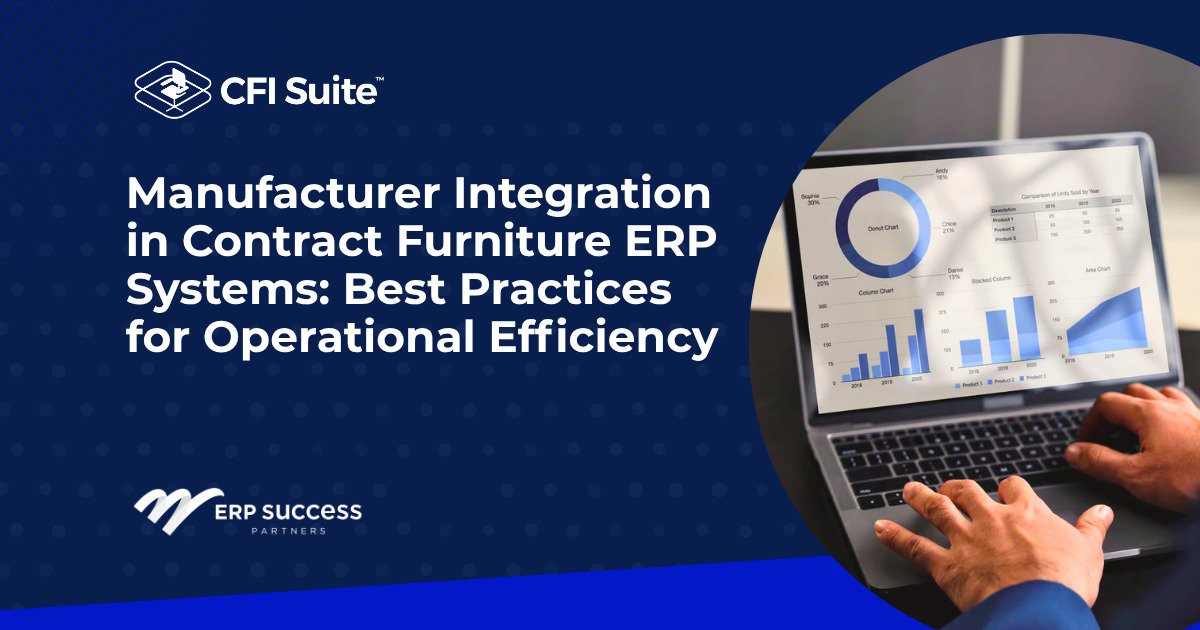
For contract furniture dealers, manufacturer integration is an important part of choosing an ERP system that supports better Operational Efficiency. In 2026, the question is not simply whether an ERP can connect with manufacturers. It is whether those connections help the business reduce manual work, improve visibility, and keep projects moving more smoothly. The right approach should support faster, more consistent execution across the business.
Why Manufacturer Integration Matters for Operational Efficiency
Contract furniture projects often involve many moving parts at once. Teams may be managing quotes, orders, product details, phased deliveries, warehouse coordination, installation schedules, and customer changes across the life of a project.
When manufacturer information does not move smoothly into the ERP system, that complexity becomes harder to manage. Staff may need to enter the same data twice, compare records manually, or pause work while they confirm whether information is current. Even small delays can create extra work across sales, operations, purchasing, and finance.
That is why strong integration matters. A connected system should help information move more reliably between the manufacturer and the dealer’s business system. For many contract furniture businesses, that kind of visibility is one reason to move toward a more unified NetSuite ERP environment that gives teams a clearer picture of operations and finances.

Reducing Manual Work Improves Operational Efficiency
One of the clearest best practices is to reduce manual handoffs wherever possible. Manual work may seem manageable at first, but it often becomes a hidden source of delay as project volume grows.
If teams have to re-enter manufacturer data, copy details between systems, or manage status updates through email and spreadsheets, the risk of inconsistency rises. That slows the workflow and weakens Operational Efficiency because employees spend time maintaining information instead of moving the project forward.
A better approach is to build integration into the normal process. When manufacturer data flows into the ERP system in a more structured way, teams can work from the same information more consistently. That improves speed, reduces avoidable errors, and helps departments stay aligned.
This is one reason ERP Success Partners highlights plug-and-play manufacturer connectors within CFI Suite. The CFI Suite brochure also notes integration with major manufacturers such as Haworth, Steelcase (through a Steelcase-specific system called the Dealer Template), MillerKnoll, and Teknion through manufacturer-specific connectors.
Standardization Supports Better Operational Efficiency
Another best practice is to standardize how integrated data is used across the business. Integration alone does not solve much if each department still handles the information differently.
For example, purchasing may interpret manufacturer updates one way while operations tracks them another way. Finance may then have limited visibility into what changed or when. That kind of disconnect can reduce the value of the integration itself.
A stronger ERP setup should help teams follow a more consistent process. If manufacturer information enters the system in a structured format, employees can review, approve, and act on it in a more predictable way. That supports Operational Efficiency because fewer steps depend on individual workarounds.
In practice, standardization also strengthens reporting. Leaders can review cleaner information, identify delays more easily, and make decisions with more confidence because the data is not being reshaped manually by each team.

Real-Time Sync Helps Improve Operational Efficiency
Not every integration point carries the same weight. A better approach is to focus first on the areas where delays create the most operational friction.
In contract furniture, those pressure points often include:
- purchasing
- order updates
- project timing
- coordination between the manufacturer and the dealer
If teams have to wait too long for reliable information in those areas, the effect can spread quickly across the rest of the project.
That is why real-time or near real-time sync matters. In the contract furniture industry, delays between manufacturer updates and internal system updates can create extra work across purchasing, project coordination, scheduling, and customer communication. When information moves more quickly between the manufacturer and the dealer’s ERP system, teams can respond faster, reduce rework, and make better decisions with more current data. ERP Success Partners supports this kind of connected workflow through its contract furniture solutions, helping dealers improve visibility and Operational Efficiency across the business.
For dealers, the practical takeaway is simple: prioritize integration where outdated information causes the most rework. That is often where better Operational Efficiency becomes visible first.
Integration Should Support Finance as Well as Operations
Manufacturer integration is often discussed as an operations issue, but finance benefits from it too. When manufacturer-related data is disconnected, finance may have less confidence in order status, revenue timing, or cost movement tied to active projects.
That makes forecasting harder and can delay reporting. Project issues may begin in purchasing or order coordination, then show up financially much later. By that point, leadership may be reacting instead of responding early.
A better approach is to treat integration as part of overall business visibility. When operational activity and financial reporting are more closely connected, teams can understand project performance more clearly. That leads to better planning and stronger control across the business.
This broader value of a unified system also shows up in ERP Success Partners’ content on future-proofing your contract furniture business with CFI Suite.
What Dealers Should Prioritize for Operational Efficiency
For contract furniture dealers, the best approach to manufacturer integration is a practical one. Reduce manual work, improve consistency, and focus on the areas where delays slow projects down. Just as important, make sure operations and finance are working from the same information.
Those steps improve Operational Efficiency by helping teams work faster, reduce errors, and gain better visibility across the project lifecycle.
For businesses reviewing their current ERP strategy, manufacturer integration should be part of the larger conversation about system fit. A contract furniture-specific platform such as CFI Suite is designed to support that kind of connected workflow. To see how ERP Success Partners approaches these challenges, explore its contract furniture solutions.